Naperville, IL real estate
Homes for sale, the monthly market report, selling, and the neighborhoods, all on one page for Naperville. Median value $620K, 42 days on market.
Naperville, IL holds about 57,135 homes, 75% of them owner-occupied, with a median year built of 1990. Naperville features single-family homes and neighborhood tracts such as Pembroke Greens. Buyers weigh higher median prices against access to local amenities and established suburban infrastructure. Pricing spans starter options up to upper-tier homes near $967,000.
One transaction closed in Naperville; the properties are below.
Source: Redfin (through May 2026) · U.S. Census ACS (2024)
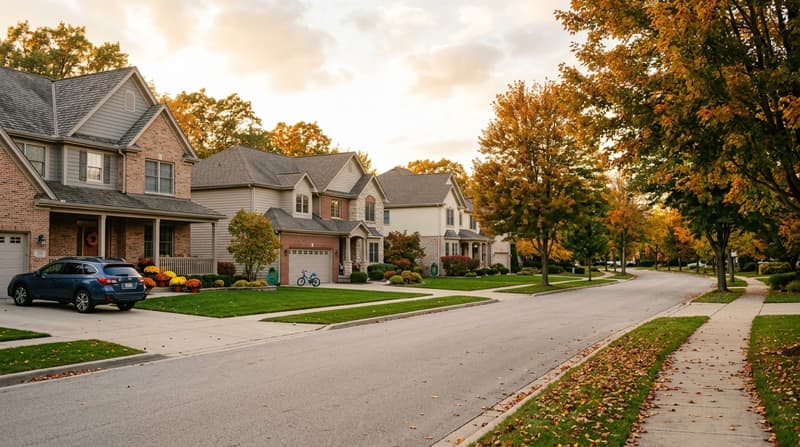

Naperville on record
- Population
- 150,692
- Households
- 54,847
- Median household income
- $155,105
- Median home value
- $540,200
- Median rent
- $1,885
- Owner-occupied
- 74.8%
- Median year built
- 1990
- Average commute
- 30 min
- County
- DuPage County
- Land area
- 39.4 sq mi
Source: U.S. Census Bureau ACS 5-year, 2020–2024 5-year estimate; U.S. Census Bureau TIGER, Vintage 2024. Retrieved September 2026.
Neighborhoods in Naperville
Cress Creek
Cress Creek is a subdivision in northern Naperville developed largely between the 1960s and 1980s around Cress Creek Country Club.
White Eagle
Situated in southwestern Naperville, White Eagle is a planned development built primarily in the 1990s and early 2000s around an 18-hole championship golf course.
Saybrook
Saybrook is a residential subdivision on the northwest side of Naperville, established in the late 1960s.
Ashbury
Ashbury is a master-planned community in southern Naperville developed in the 1990s.
Brookdale
Located in northwestern Naperville north of Interstate 88, Brookdale was developed during the 1970s and 1980s.
Hobson West
Hobson West is a subdivision established in the 1970s, located south of Downtown Naperville along the West Branch DuPage River.
Also in Naperville: Ashwood Creek, Ashwood Park, Ashwood Pointe, Atwater, Breckenridge Estates, Brookwood Trace, Brush Hill, Carillon Club, Carriage Hills, Century Farms, Clow Creek Farm, East Highlands, Harmony Grove, High Meadow, Hobson Village, Knoch Knolls, Lakewood Crossing, Maplebrook, Naperville Historic District, Old Farm, Pembroke Greens, River Run, Riverwoods, Rose Hill Farm, Saddle Creek, South Pointe, Spring Hill, Springbrook, Stillwater, Tall Grass, The Fields, Timber Creek, Townhomes of the Fields, Villages of West Glen, Villas of the Fields, Wagner Farms, West Highlands, Westwind, Wheatland South and Winding Creek. These have no page of their own yet; ask about any of them.
The Naperville market right now
The Naperville median sold price stands at $620,000 as of May 2026, -4.6% year over year. The twelve-month peak was $650,000 in June 2025. 1,643 homes closed over the period, averaging 100.3% of list price most recently, with 42 days on market.
Naperville neighborhoods side by side
| Neighborhood | Housing stock |
|---|---|
| Cress Creek | Built mainly between the 1960s and 1980s, Cress Creek features single-family homes in colonial and ranch styles alongside clusters of townhomes. Houses typically range from 2,000 to 4,000 square feet on quarter-acre to half-acre lots with attached two-car or three-car garages and curvilinear streets. |
| White Eagle | Developed primarily in the 1990s and early 2000s, this subdivision contains two-story traditional single-family homes and attached townhomes. Properties typically span 2,800 to 5,000 square feet on quarter-acre to third-acre lots with attached three-car garages along cul-de-sacs and curving roads. |
| Saybrook | Constructed during the late 1960s and 1970s, Saybrook consists of single-family detached homes in split-level, ranch, and two-story colonial styles. Residences average 2,000 to 3,000 square feet on quarter-acre lots with attached two-car garages along curving, tree-lined residential streets. |
| Ashbury | Developed in the 1990s, Ashbury contains two-story traditional single-family houses with brick and siding facades. Home sizes range from 2,500 to 4,200 square feet on quarter-acre to third-acre lots with attached two-car and three-car garages organized across a network of cul-de-sacs. |
| Brookdale | Built throughout the 1970s and 1980s, Brookdale features two-story traditional homes, split-levels, ranches, and attached townhomes. Most single-family houses offer 1,800 to 3,000 square feet with attached two-car garages on quarter-acre lots situated on looping streets and cul-de-sacs. |
| Hobson West | Established in the 1970s and 1980s, Hobson West consists of single-family houses built predominantly in colonial and traditional two-story styles. Square footage generally spans 2,200 to 3,500 square feet on lots averaging one-quarter to one-third of an acre with attached two-car garages. |
School districts in Naperville
From public records, with the source for each. District boundaries do not follow city lines; check the address with the district.
Naperville Community Unit District 203
Grades PK–12 · Unified district · NCES EDGE school district boundaries 2024-2025, September 2026
Community Unit School District 200
Grades PK–12 · Unified district · NCES EDGE school district boundaries 2024-2025, September 2026
Indian Prairie Community Unit School District 204
Grades PK–12 · Unified district · NCES EDGE school district boundaries 2024-2025, September 2026
Plainfield School District 202
Grades PK–12 · Unified district · NCES EDGE school district boundaries 2024-2025, September 2026
Valley View Community Unit School District 365U
Grades PK–12 · Unified district · NCES EDGE school district boundaries 2024-2025, September 2026
Districts are listed by name and source only, never by rating: choosing a home by school quality is yours to weigh, and fair-housing law keeps an agent out of steering it.
One closing in Naperville
Not a feed of everything on the market: these are the Naperville properties I personally represented.
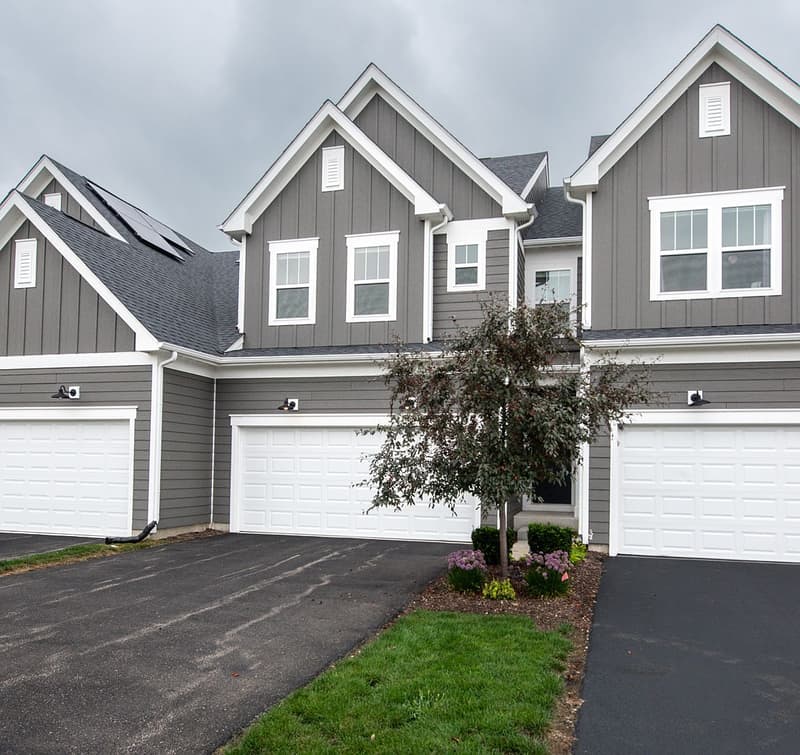 $585,0001205 Josiah Rd, NapervilleClosed August 7, 2026

The properties shown here are transactions I personally represented, compiled from my public agent record. This site is not an MLS IDX feed and does not show the full active market; ask me and I will pull everything that fits.
Living in Naperville
About Naperville
Naperville is a DuPage County city with a population of 150,692. The municipality encompasses 46 distinct neighborhoods that provide an expansive range of residential housing options. Prominent landmarks located within the community include Naper Settlement and the Millennium Carillon.
Travel times connect residents to major employment centers and commercial destinations across the region. A drive to Oak Brook spans 17.2 miles and takes 31 minutes. Reaching O'Hare International Airport requires a drive of 30.7 miles, which takes 57 minutes. A trip to The Loop involves a 34-mile drive that takes 79 minutes. The presence of 46 neighborhoods accommodates buyers seeking suburban living within reach of core business nodes. You can review current property values, recent sales figures, and local housing metrics in the market section below.
Is Naperville a good place to live?
Naperville covers 39.4 sq mi of land area situated within DuPage County. The community includes an overall population of 150,692 people distributed across 54,847 total households. Much of the residential housing stock dates to late twentieth-century development, showing a median year built of 1990.
Property ownership represents the primary residential arrangement, reflected in an owner-occupied housing share of 74.8%. Buyers exploring real estate options across the city will encounter a median home value of $540,200. Residents who decide to lease local housing face an overall median rent payment of $1,885 per month.
Area economic data shows steady financial capacity, highlighted by a reported median household income of $155,105. Daily transit patterns indicate that local workers spend an average travel duration of 30 minutes commuting. These recorded figures regarding property values, geographical scale, and travel lengths outline the standard living environment. You can examine these baseline housing prices, household measures, and transit timelines to determine how Naperville functions.
Naperville at a glance
Naperville spans 39.4 square miles in DuPage County, with a population of 150,692 across 54,847 households. The median home value is $540,200, and owner-occupied homes account for 74.8% of the housing stock. The figures below summarize key metrics on local housing, commute times, and residential property to guide your search.
Homes and neighborhoods in Naperville
Naperville residential housing developed primarily during the late twentieth century. Homes built between 1970 and 1999 account for 66.0 percent of the housing stock. In neighborhoods established during the 1960s and 1970s, you will find a variety of classic architectural styles. Saybrook features split-level, ranch, and two-story colonial houses averaging 2,000 to 3,000 square feet on quarter-acre parcels. Cress Creek, built between the 1960s and 1980s, adds townhome clusters alongside colonial and ranch houses on lots up to half an acre. Established across the 1970s and 1980s, Brookdale and Hobson West provide single-family traditional two-story layouts with attached two-car garages.
Subdivisions constructed in the 1990s and 2000s introduced larger floor plans on curved roads and cul-de-sacs. Ashbury was developed in the 1990s with two-story single-family homes spanning 2,500 to 4,200 square feet. These brick and siding houses sit on lots ranging from one-quarter to one-third of an acre. Developed in the 1990s and early 2000s, White Eagle contains two-story traditional residences and townhomes reaching up to 5,000 square feet. Homes in White Eagle include attached three-car garages.
Structures dating from 2000 to 2009 represent 15.0 percent of local homes, while builds from 2010 and later account for 8.0 percent. Older properties built between 1940 and 1969 comprise 8.4 percent, and pre-1940 residences make up 2.5 percent. Additional subdivisions across the community include Ashwood Park, Atwater, Brookwood Trace, Century Farms, and East Highlands.
The Naperville housing market
The Naperville real estate market recorded steady pricing trends across the 12-month span ending in August 2026. The median sold price rose from $494,500 in September 2025 to $512,000 in August 2026. Properties sold at a steady pace throughout this period. Homes spent an average of 19 days on the market in September 2025 and 20 days in August 2026.
Buyers and sellers agreed on terms close to initial asking figures. The list-to-sale price ratio recorded 97.8% in September 2025, shifting to 97.6% by August 2026. Inventory patterns also shifted over the year. The market registered 54 new listings and 61 closed sales in September 2025. In August 2026, new listings totaled 73 while closed sales reached 58. You can review the full market report to follow ongoing sales volume, pricing shifts, and local housing movement.
Housing stock
Single-family detached houses make up 62.8% of the housing stock in Naperville. Multi-unit residential buildings represent 24.7% of the homes you will encounter across the city. Single-family attached properties account for 12.2% of local residences, and manufactured structures comprise 0.4%.
Most residential construction dates to the late twentieth century, with 66.0% of homes built between 1970 and 1999. Properties built from 2000 through 2009 supply 15.0% of the total, while structures from 2010 and later contribute 8.0%. Older inventory remains limited, as homes built between 1940 and 1969 make up 8.4%, and pre-1940 properties represent 2.5%.
Schools serving Naperville
Five unified public school districts serve Naperville with education spanning prekindergarten through twelfth grade. You will find attendance boundaries assigned to Naperville Community Unit District 203, Community Unit School District 200, and Indian Prairie Community Unit School District 204. Plainfield School District 202 and Valley View Community Unit School District 365U also provide prekindergarten through twelfth grade instruction across parts of the city.
For higher education, North Central College is a college located in Naperville.
Getting around
Public transportation options in the community include the Naperville and Route 59 transit stations. If you commute to The Loop, transit covers 29.3 miles in 59 minutes. Driving to The Loop takes 79 minutes across 34 miles of road.
For trips to Oak Brook, driving 17.2 miles takes 31 minutes, while transit takes 99 minutes for 18.6 miles. Traveling to O'Hare International Airport requires a 30.7-mile drive that takes 57 minutes. By comparison, public transit to O'Hare International Airport spans 47.5 miles and takes 108 minutes.
Things to do in Naperville
Outdoor recreation in Naperville centers on public parkland, walking paths, and municipal golf facilities. You can walk along the Naperville Riverwalk or travel the regional path along the DuPage River Trail. Knoch Knolls Park and Nike Park provide open green space and local park amenities across the community. Golfers have access to public play at both Springbrook Golf Course and Naperbrook Golf Course throughout the playing season.
Downtown serves as the primary commercial and dining district within the city. You will find a concentration of local restaurants, retail storefronts, and service businesses along the central streets. The district provides places to eat, shop, and gather near the riverfront corridor. Sidewalks connect commercial blocks, allowing visitors to walk between stores and dining options during a single visit.
Local cultural institutions offer performance spaces and community resources close to the center of town. Wentz Concert Hall & Fine Arts Center hosts musical performances and arts programs throughout the calendar year. You can also visit the Naperville Public Library at the Nichols Library branch, which provides research materials, work areas, and public book collections.
Working in Naperville
Nalco Company Headquarters maintains a corporate campus within the city of Naperville. The organization is headquartered in the municipality, operating as a primary workplace in the area. You can reach the corporate campus directly by traveling along local roads. This established facility provides corporate employment opportunities and office space within the city borders. Working at this campus allows you to keep your daily commute inside the local community.
Pros and cons of living in Naperville
You will find an active housing market in Naperville, where sellers added 73 new listings in August 2026. Homes sold in an average of 20 days during that month, and buyers paid 97.6 percent of list price. The community covers 39.4 square miles in DuPage County, and 74.8 percent of housing units are owner occupied. For local employment trips, your drive covers 17.2 miles to Oak Brook in 31 minutes.
If you commute toward Chicago or regional airports, you must account for extended drive times. Driving 34 miles to The Loop takes 79 minutes, while a 30.7-mile trip to O'Hare International Airport takes 57 minutes. Across the entire municipality, the typical commute time across all destinations is 30 minutes. You must also plan for higher purchase prices, with an August 2026 median sold price of $512,000. Naperville records a median home value of $540,200, alongside a median monthly rent of $1,885.
Sources: U.S. Census Bureau ACS 5-year; U.S. Census Bureau TIGER.
Tell me what you're trying to do
Buying, selling, or still deciding, a short note is enough to start. You'll get a real reply from me, not an auto-responder.
- A person reads every message
- No drip campaign, no lead-sharing with other agents
- Happy to answer one question and leave it there
Talk to someone who works Naperville
I have 2 years in these neighborhoods and answer personally.